
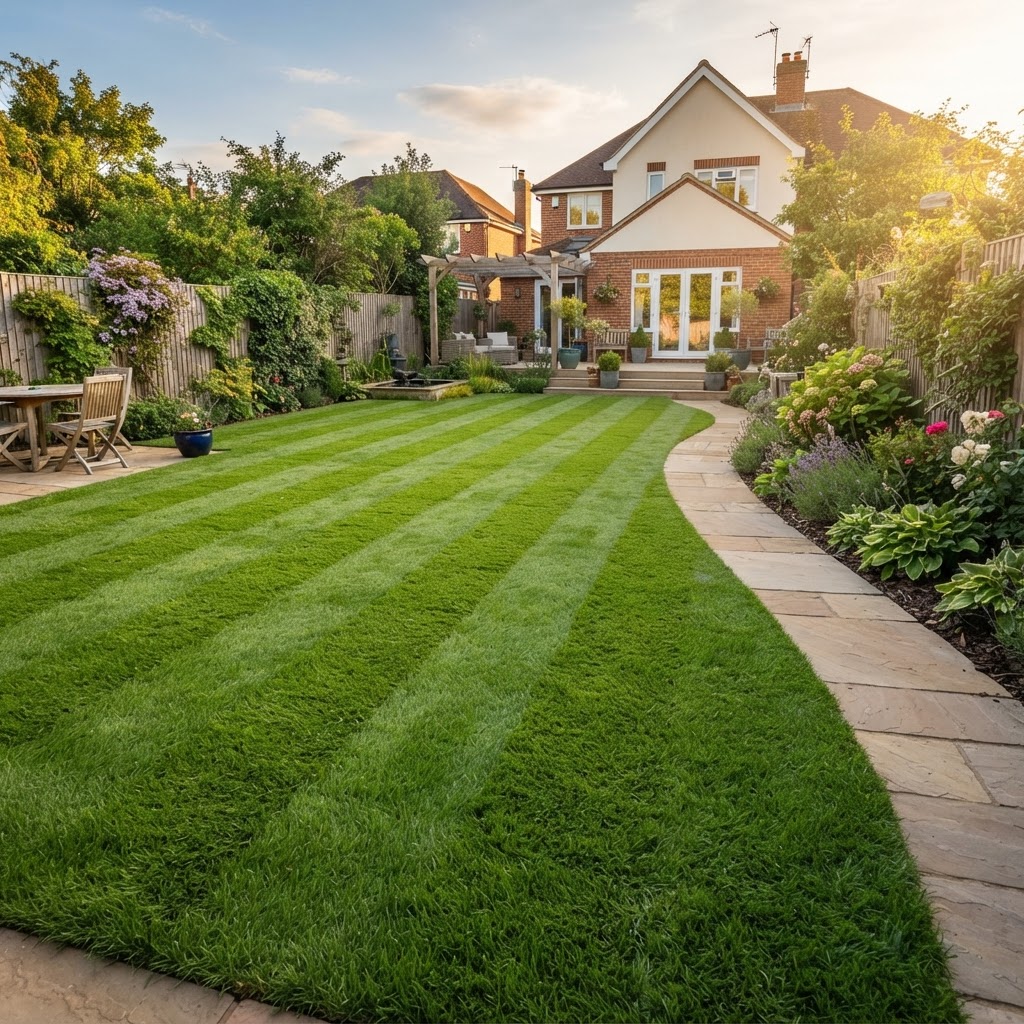
A lush, green lawn is the centrepiece of many gardens, and laying new turf is the fastest way to achieve one. But timing matters — lay turf at the wrong time of year and you risk it failing to establish. Here's our seasonal guide to laying turf in Milton Keynes and Buckinghamshire, along with the aftercare answers we're asked about most.
The best time to lay turf in the UK
Mid-autumn to early spring (October to March) is widely considered the best time to lay turf in the UK. During these months:
- The soil is still warm from summer, encouraging root growth
- Rainfall is more frequent, meaning less watering
- There's less risk of the turf drying out
- The turf has time to establish before the stress of summer heat
Laying turf in autumn: why September and October are ideal
Autumn is the sweet spot for new lawns. Laying turf in September or October gives you warm soil, regular rainfall and no summer heat to fight — the ideal combination for quick rooting. Can you put turf down in October? Absolutely, and in much of Buckinghamshire it's the single best month of the year to do it. Aim to finish by early November, before the ground turns cold and wet.
Can you lay turf in summer?
Yes, but it requires much more care. If you lay turf in late spring or summer:
- You'll need to water it thoroughly every day — sometimes twice a day in hot weather
- There's a higher risk of the turf shrinking or dying if it dries out
- Establishment is slower because the grass is putting energy into top growth rather than roots
If you must lay turf in summer, do it as early as possible in the day and water generously.
Can you lay turf in winter?
Turf can be laid in winter provided the ground isn't frozen or waterlogged. The turf won't grow much, but it will sit dormant and begin rooting when the soil warms up in spring. Avoid laying turf when the ground is frozen, as the roots can't make contact with the soil.
Preparing the ground
Whatever time of year you lay turf, good ground preparation is essential:
- Clear the area — remove old grass, weeds and debris
- Improve the soil — add topsoil or soil improver if needed
- Level the ground — rake and level, then firm the surface
- Create a slight slope — ensure water drains away from buildings
- Water the soil — moisten the prepared surface before laying turf
Laying the turf
- Start from the edges and work inwards
- Stagger the joints like brickwork
- Avoid walking on freshly laid turf — use planks to distribute your weight
- Water immediately after laying
- Keep watering daily for the first two weeks
New turf aftercare: the questions we're asked most
How long before you can walk on new turf?
Wait at least 2-3 weeks before light use, and 4-6 weeks before regular use. You can check if the turf has rooted by gently trying to lift a corner — if it resists, the roots have taken hold. Keep children and pets (especially dogs) off the new lawn for the first 3-4 weeks; a dog running over turf before it has rooted can tear it and leave dips.
How often should you water new turf?
Water new turf daily for the first two weeks — thoroughly enough that the soil beneath is damp (about 20-30 minutes per area with a sprinkler). In hot, dry spells, water twice a day. From week three, cut back to every other day, then twice a week until fully established. Under-watering in the first fortnight is the most common cause of new lawns failing.
When can you mow new turf?
Don't mow new turf until the grass reaches about 5-6 cm — usually 3-4 weeks after laying. Use a mower with sharp blades set high, and never cut more than the top third of the grass in one go. Gradually lower the height over the following weeks.
Should you feed new turf?
Not immediately. Fertilise new turf about 4-6 weeks after laying (a spring or autumn lawn feed, depending on the season) — feeding too early can scorch the young roots.
Not sure about the timing for your garden?
Every garden is different — soil, shade and drainage all affect the answer. We prepare ground and lay premium turf across Milton Keynes and Buckinghamshire, and we're happy to advise on the best timing for your plot. Get in touch for a free quote.